Wayfinder 5: Peat
Wayfinder 5: Literary Landscapes by Martin Heron
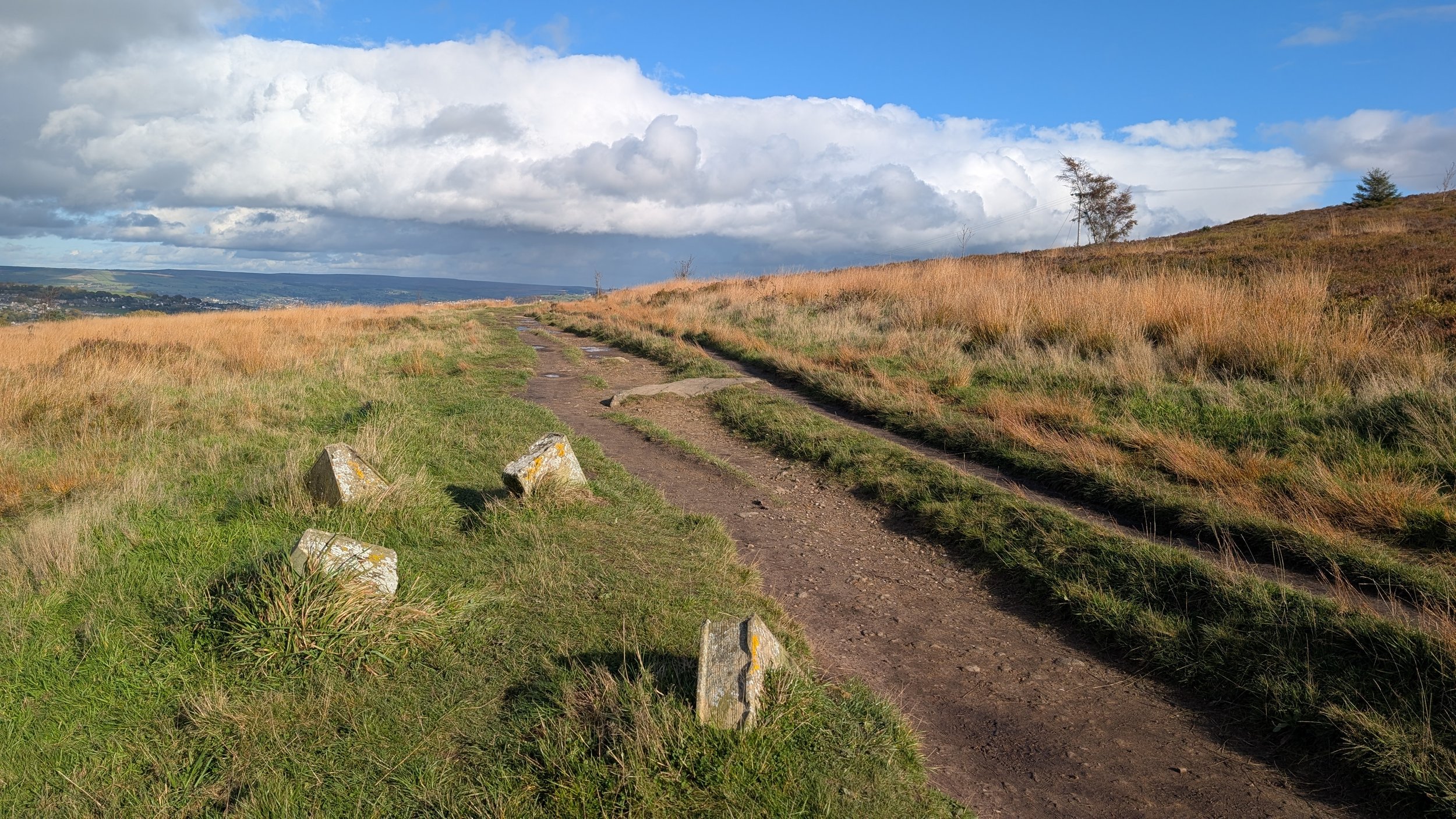
Walking directions: From the trig point, instead of continuing straight across the tops, take the right-hand path to drop down the hill and re-join the broad footpath that cuts across the park from Dimples Lane. When you reach the main path, turn left and continue walking. Keep a lookout on the ground to your right for stone books half-buried beside the walking trail. This is Wayfinder 5.
About this Wayfinder
I love sculptor Martin Heron’s unobtrusive Literary Landscapes artwork, which has settled so snugly into the hillside that I walked past it on several occasions before it caught my eye! What a clever nod to this landscape’s industrial and cultural heritage. It’s been here since 2003 and is now mottled with lichen. Eventually, if the blanket bog is able to recover, it will be claimed by bog moss and sink beneath the peat.
A healthy bog grows at a rate of 1 millimetre a year and stores in its peat a record of what was buried, what was in the atmosphere, which pollens and which pollutants settled here over hundreds of years. In The Book of Bogs, Alys Fowler writes that peat is “a rich fudge cake of all that is gone but not disappeared”. This made me think about the memories stored in peat, how huge and unhurried the lifespan of the moor seems compared to ours.
In Wayfinder 5, the walker and the moor are talking about memory. The walker is nostalgic, and the moor is sometimes angry. This poem weaves in two scenes from the Brontës’ lives, drawing on family friend Ellen Nussey’s recollections of ‘The Meeting of the Waters’ (the place now known as the Brontë Waterfall), and Anne’s last train journey to the sea. In the Brontës’ time, life expectancy in Haworth was just 24. The Industrial Revolution that brought overcrowding and poor sanitation is also written in the landscape here.
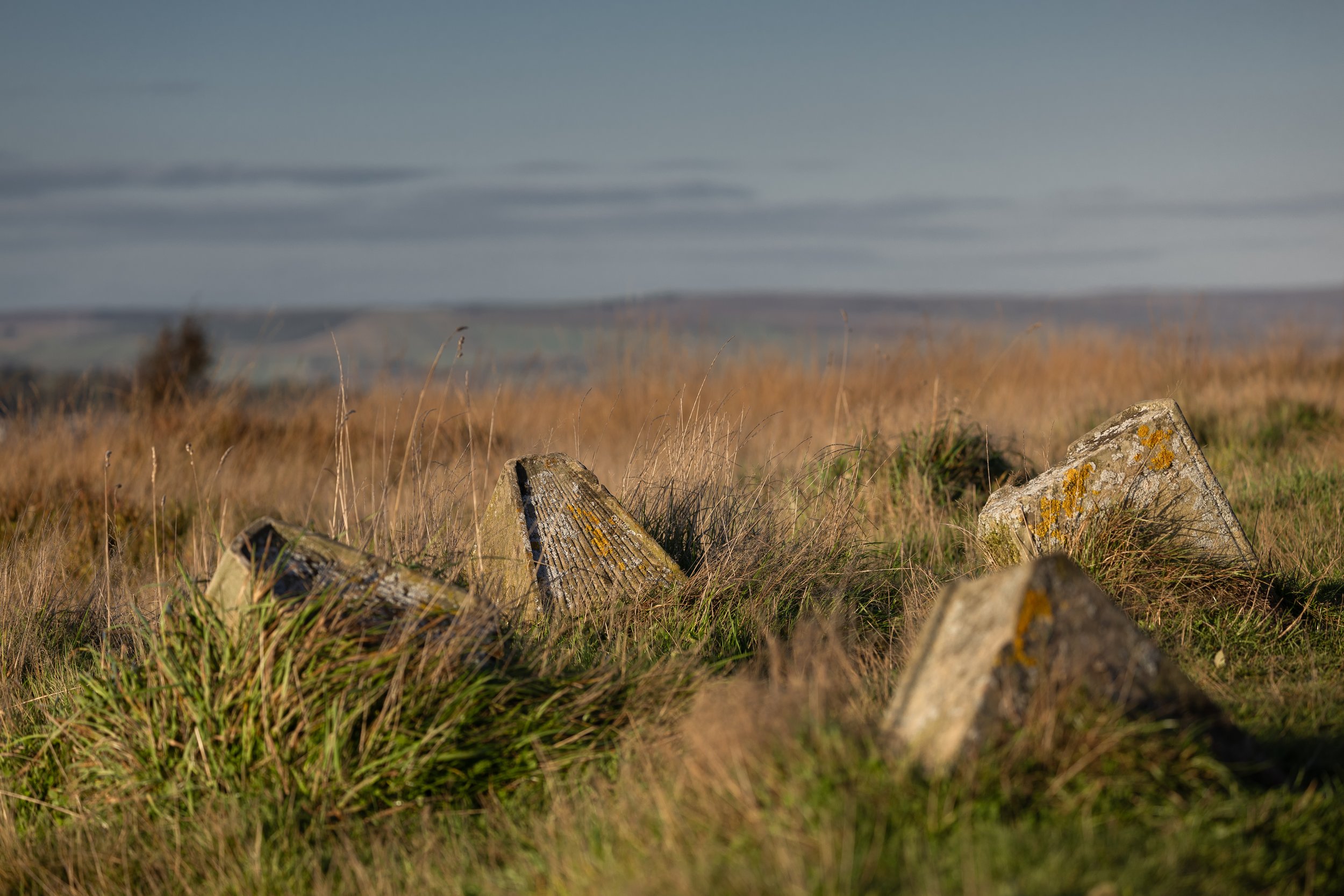
Close up of Literary Landscapes @jed.pix