Wayfinder 6: Carbon
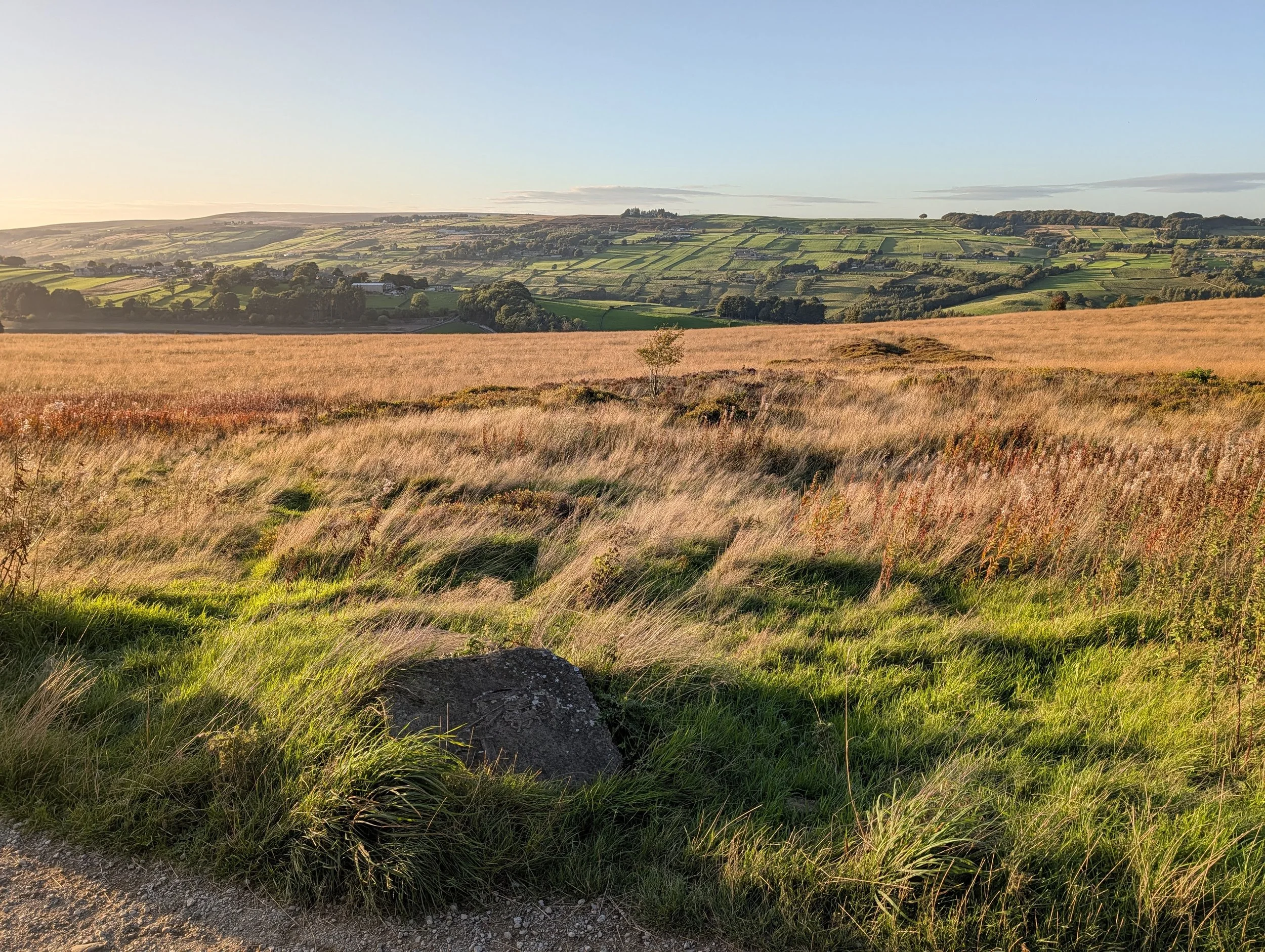
Wayfinder 6: Stone carving by Stevan Tica near the site of a disused coal mine @jed.pix
Walking directions: From the Literary Landscapes sculpture, ignore the diagonal path to the left and right to keep going straight along the main path that stays on the level. This heads towards the heathy mounds of another old quarry, passing between two trees. Once these mounds are on your left, look down on your right to find a large flat stone with a carving of a horse and whim gin. This marks the site of a former coal mine.
About this Wayfinder
My residency on Penistone Hill coincided with a drought and the hottest UK summer since records began. As other moorlands burned, it was impossible not to feel anxious for the nature reserve’s fragile recovery as I stood on a tinder-dry hillside of purple moor grass. One long golden evening in mid-August, my phone blared a wildfire alert from the government. Following the Geological Trail a few weeks later, I realised I’d been near the site of a former coal mine at the time.
Wayfinder 6 explores the connection between the moor’s deep time as a carbon store, the release of this carbon through peat cutting and coal mining, and our present climate crisis. The coal mine on Penistone Hill was operational for a short time in the mid-1800s, before the arrival of the Worth Valley Railway brought better quality coal from elsewhere. The stone carving that marks the site is one of four created by local artist Stevan Tica. It shows the horse-powered whim gin that would have been used to hoist out heavy buckets of coal and lower men into the mine.
The poem also briefly references the Crow Hill bog burst, an environmental disaster that Bramwell, Emily and Anne Brontë were caught up in as children, along with their young nursemaids Nancy and Sarah de Garrs. When heavy rain and thunderstorms followed a hot, dry summer, a massive peat landslide was heard as far away as Leeds. I share my birthday with this bog burst (though I’m not quite as old!) and have previously written an imagined account of Nancy’s experience. The incident would undoubtedly have made a lasting impression, and is thought to have inspired Emily’s poem High Waving Heather.
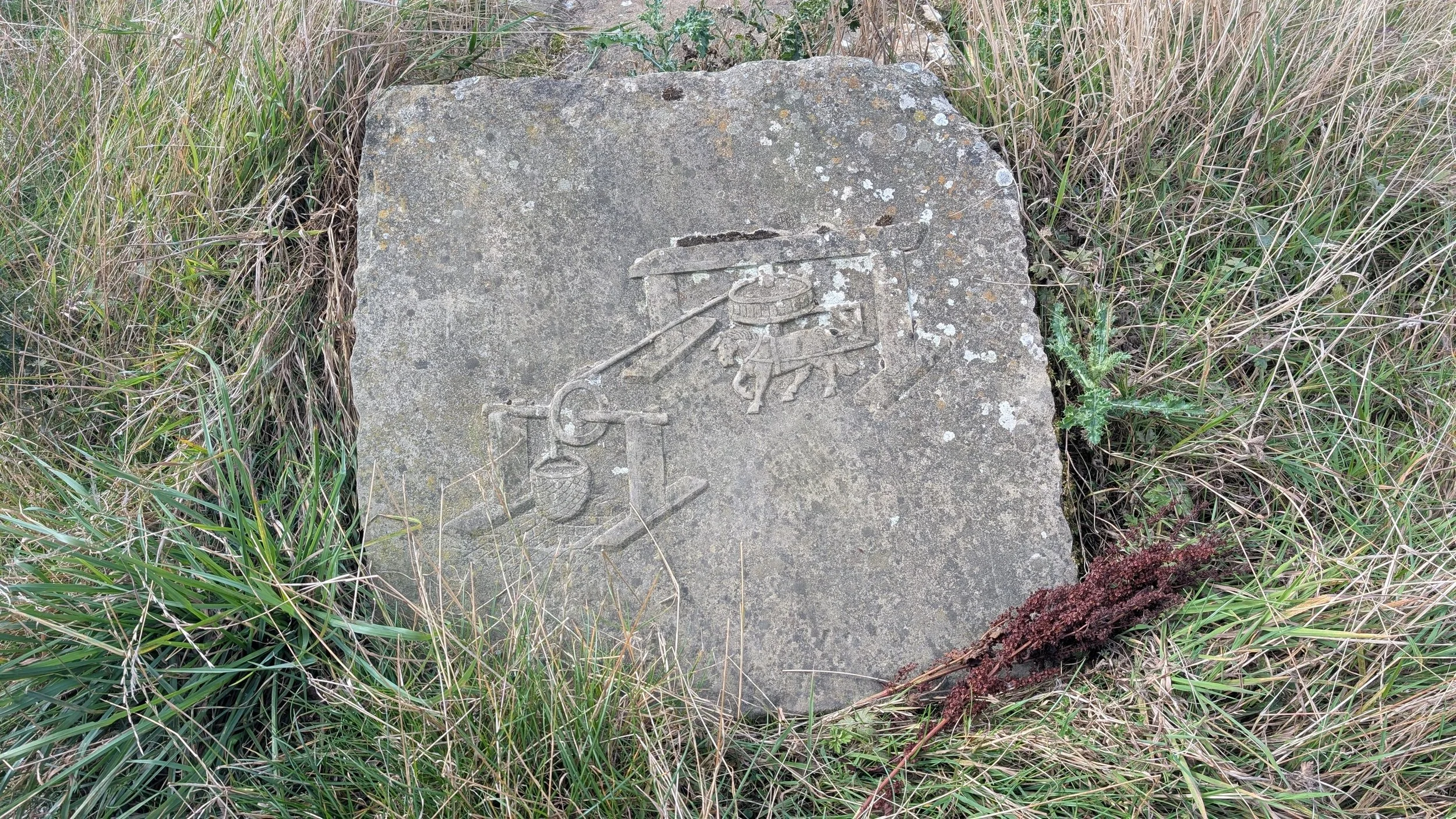
Detail of stone carving by Stevan Tica showing the horse-powered whim gin