Wayfinder 10: Kestrel
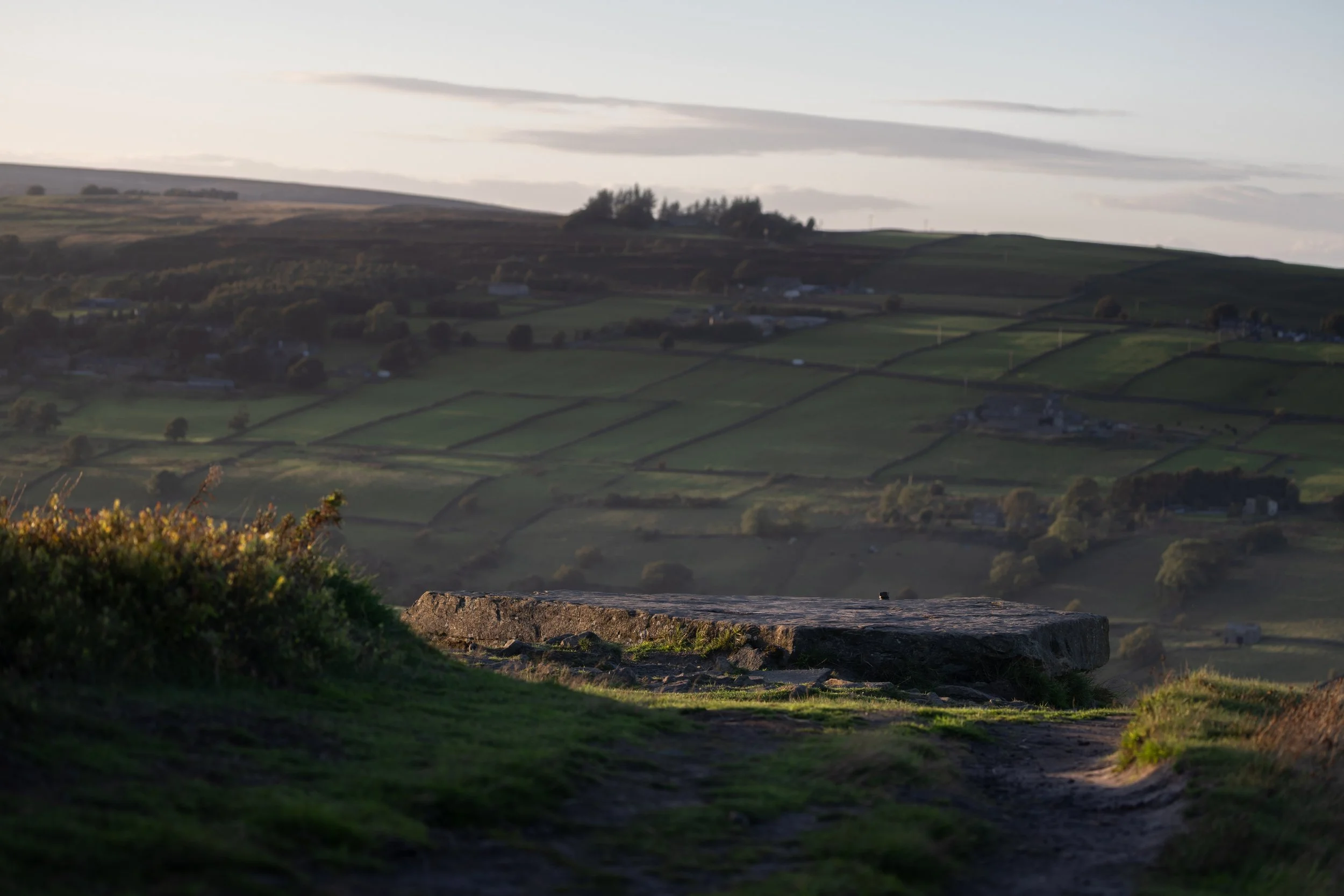
Wayfinder 10: ‘Kestrel stone’ overlooking Penistone Hill @jed.pix
Walking directions: From the pavilion, continue along the stony path until you're a few paces past the quarry fence. Take a grassy path to your left that passes heaps of quarry stone and a tree on its left-hand side. After the tree, the path curves to the right. Keep following it, continuing straight at an intersection of paths marked with a wooden post. Continue until you reach a large, flat stone with metalwork in, at a t-junction that overlooks the grassland and reservoir below. It can get very windy here, so watch your step!
About this Wayfinder
I took the liberty of nicknaming this place the kestrel stone, because one afternoon as I was heading back from a walk, I’d reached the slopes below when I noticed a kestrel hovering here, suspended in midair despite a strong headwind that had nearly knocked me off my feet! Kestrels are relatively common and easy to identify from their tell-tale trick of holding themselves still in flight, their hunter’s eyes laser-focused on the ground below. While looking up the names of the flowers I found on my walks, I was excited to learn that the dandelion-yellow hawkbit is so named because, according to folklore, birds of prey consumed its sap to sharpen their vision.
Despite being a familiar sight, kestrels are Amber-listed by the RSPB and their numbers have declined since the 1970s. As I stopped to marvel at the kestrel’s flight, I thought about other majestic birds of prey that would have once graced these skies, and many other birds besides that have become a rarity. Britain has lost 73 million birds in the last 50 years, and our dawn chorus grows quieter.
Patrick Brontë’s margin notes in the family’s copy of Bewick’s A History of British Birds describe an encounter with a merlin (presumably Emily’s pet hawk Nero, which she rescued injured from the moor):
This bird has peculiarly great strength and vigour, in pulling out the feathers of its tail, which I was obliged to do, with pincers, it struck its talons through a thick pair of gloves, which I wore, and brought the blood profusely out of my hands. It drove its talons with often repeated and quick successive efforts.
I was surprised to see tally marks in the contents page next to several species of eagle, as I had understood they were gone from the Haworth moors even in the Brontës’ time. In her biography of Charlotte Brontë, Elizabeth Gaskell notes that Mr. Brontë had in his younger days seen eagles “in the loneliest sweeps of the hills” on his long walks in the parish. His annotations in Bewick’s book suggest otherwise. When I reached the entry for eagles, excited to read about his encounter with our largest birds of prey, I found this note: “I saw, in Leeds, a stuffed specimen of this bird; it was considerably larger than a goose, and its neck was as thick as a man’s arm.”
In the introduction to both volumes of Bewick, Patrick quotes another author to note that “the colours of most birds fade after they have been for some time dead”. The book itself and his margin notes are a curious combination of reverence for these beautiful creatures and pragmatic observations about which are the best eating, and how they may be studied from stuffed specimens.
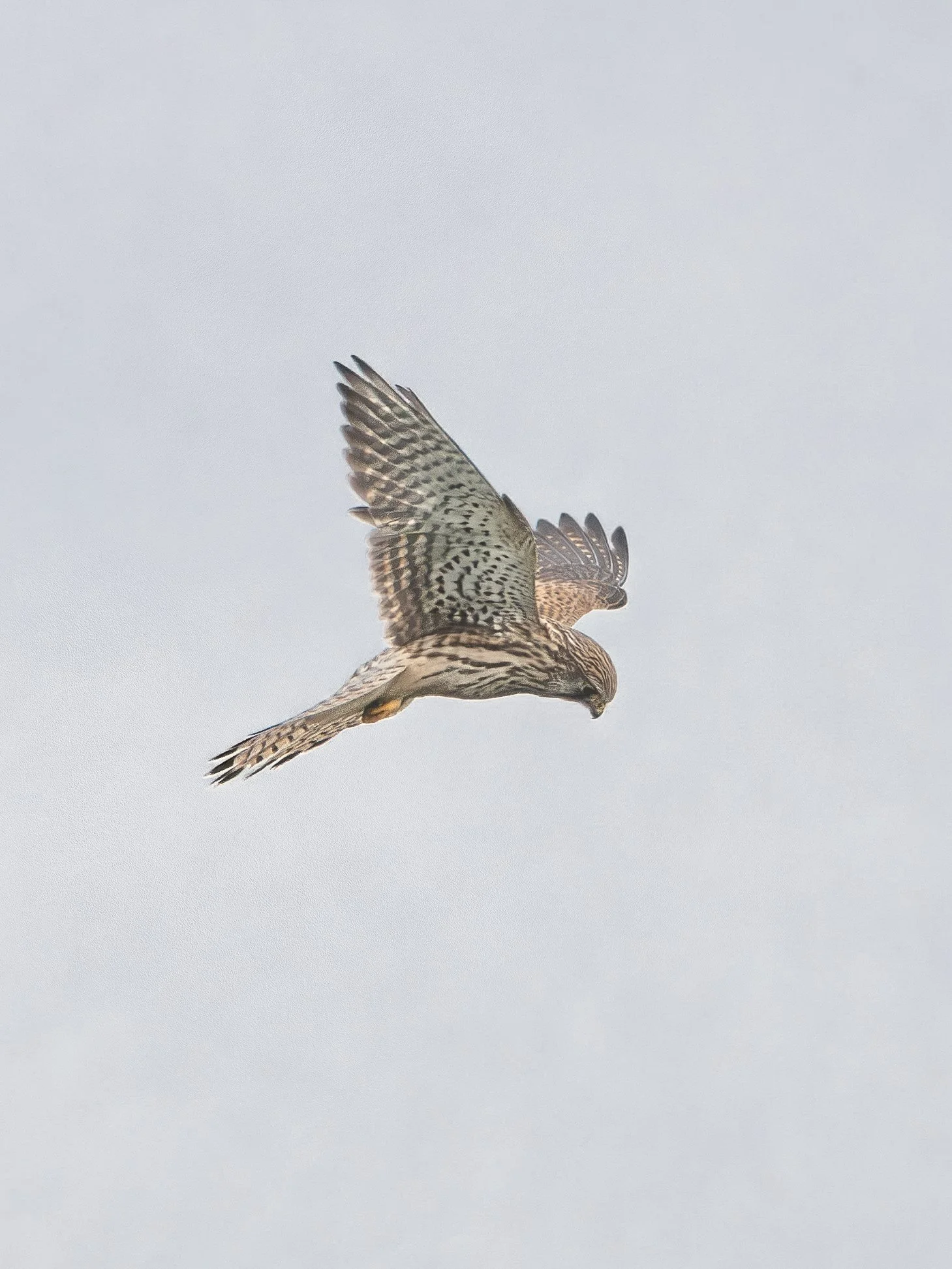
Female kestrel hunting @jed.pix