Wayfinder 11: Bilberries
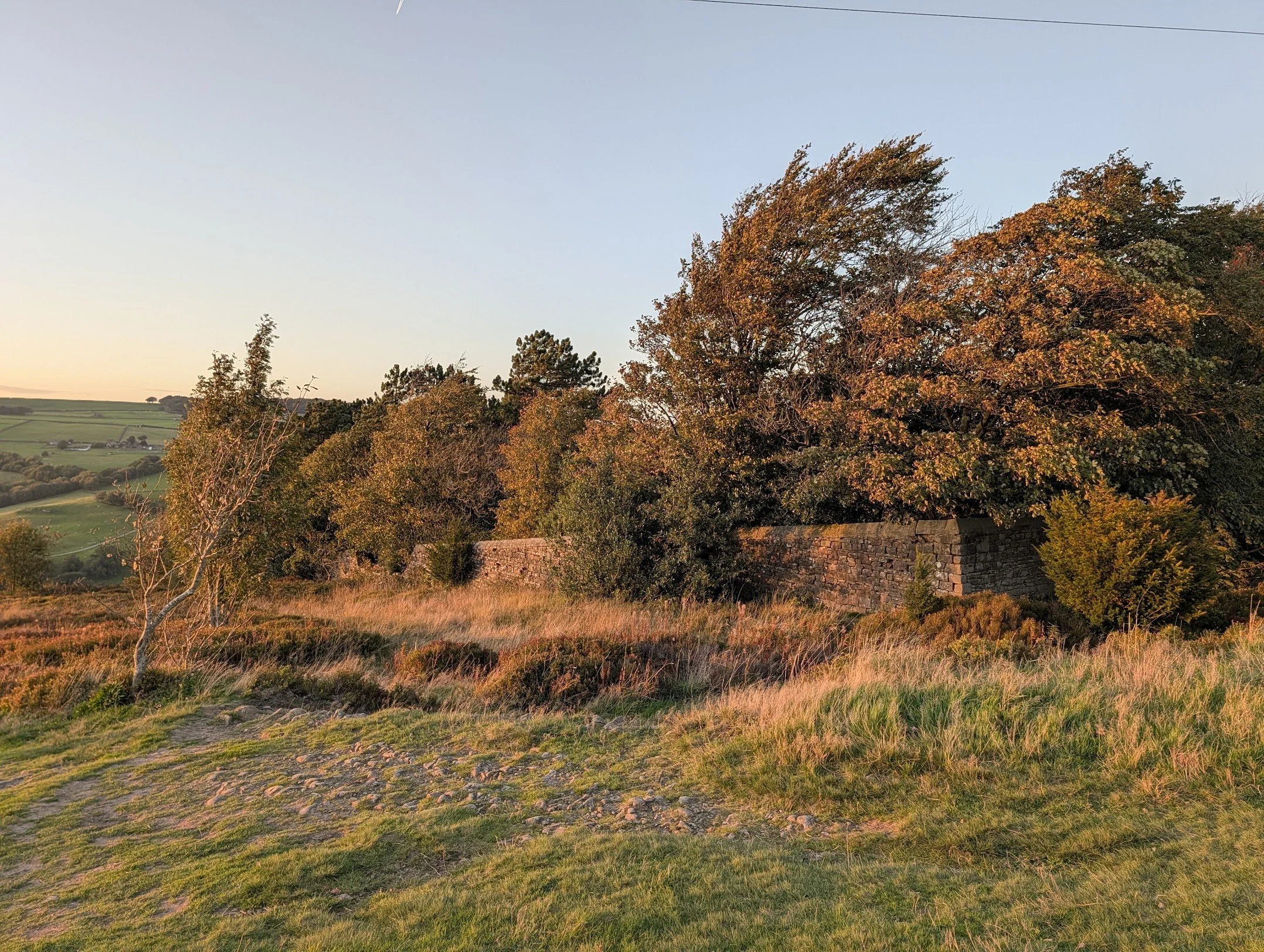
Wayfinder 11: Footpath next to the cemetery wall @jed.pix
Walking directions: From the kestrel stone, turn right and head downhill towards the path you walked along earlier (between Wayfinders 5 and 6). When you reach the bottom, take the wider of two paths that cut across the bog towards the cemetery. This is NOT the turning at the Literary Landscapes sculpture, but the one before. Follow this path until you reach an intersection of paths at the cemetery wall.
About this Wayfinder
While I was disappointed in my search for eagles, another of Patrick Brontë’s entries in Bewick’s A History of British Birds caused great excitement. In a tiny margin note next to Bewick’s engraving of an elegant little black bird with white-trimmed feathers, he wrote: “I saw a pair of ring ouzels, in Haworth mountains.” Even more thrilling, the Parsonage Research Library had an original pencil sketch by 10-year-old Emily Brontë that faithfully copied Bewick’s illustration. All of the Brontë children copied engravings from Bewick’s book, sometimes using the descriptions to add colour. But this simple black-and-white drawing by Emily really moved me. I wondered if she’d chosen to copy a bird she was familiar with?
I’ve yet to see a ring ouzel in the wild, and these Red-listed summer visitors are tricky to find now. My partner spent a whole day at Stanage Edge in the Peak District searching for one this spring, and was eventually rewarded with a couple of shy glimpses. They nest in the uplands, in steep-sided valleys and crags, and feast on moorland berries before migrating back to Africa. ‘Ouzel’ is the old English word for blackbird, but if you’re lucky enough to hear a ring ouzel, you’ll notice they sound very different. The ring ouzel has a telephone-like ‘ring-ring’ call, but his name comes from the distinctive white mark on his chest.
I chose this patch of Penistone Hill for the ring ouzel to make a guest appearance, because during my summer residency, this side of the hill was covered in bilberries. Their reddening leaves beside the purple heather and gleaming rowan berries were spectacular.
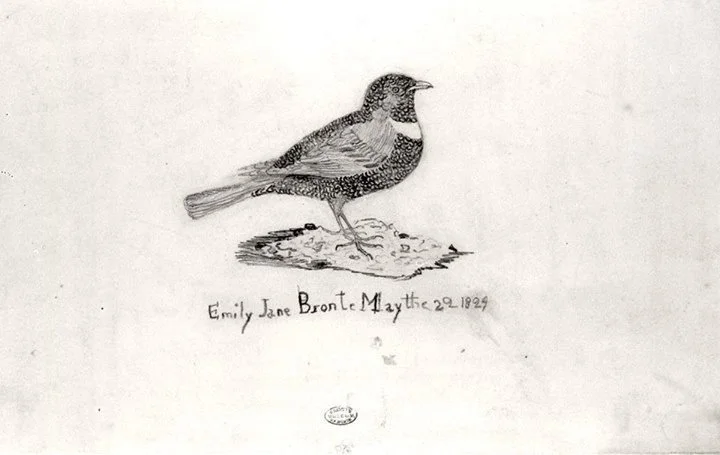
Emily Brontë’s pencil sketch of a ring ouzel, after Thomas Bewick. Original in The Bronte Parsonage Research Library