Wayfinder 8: Dragon
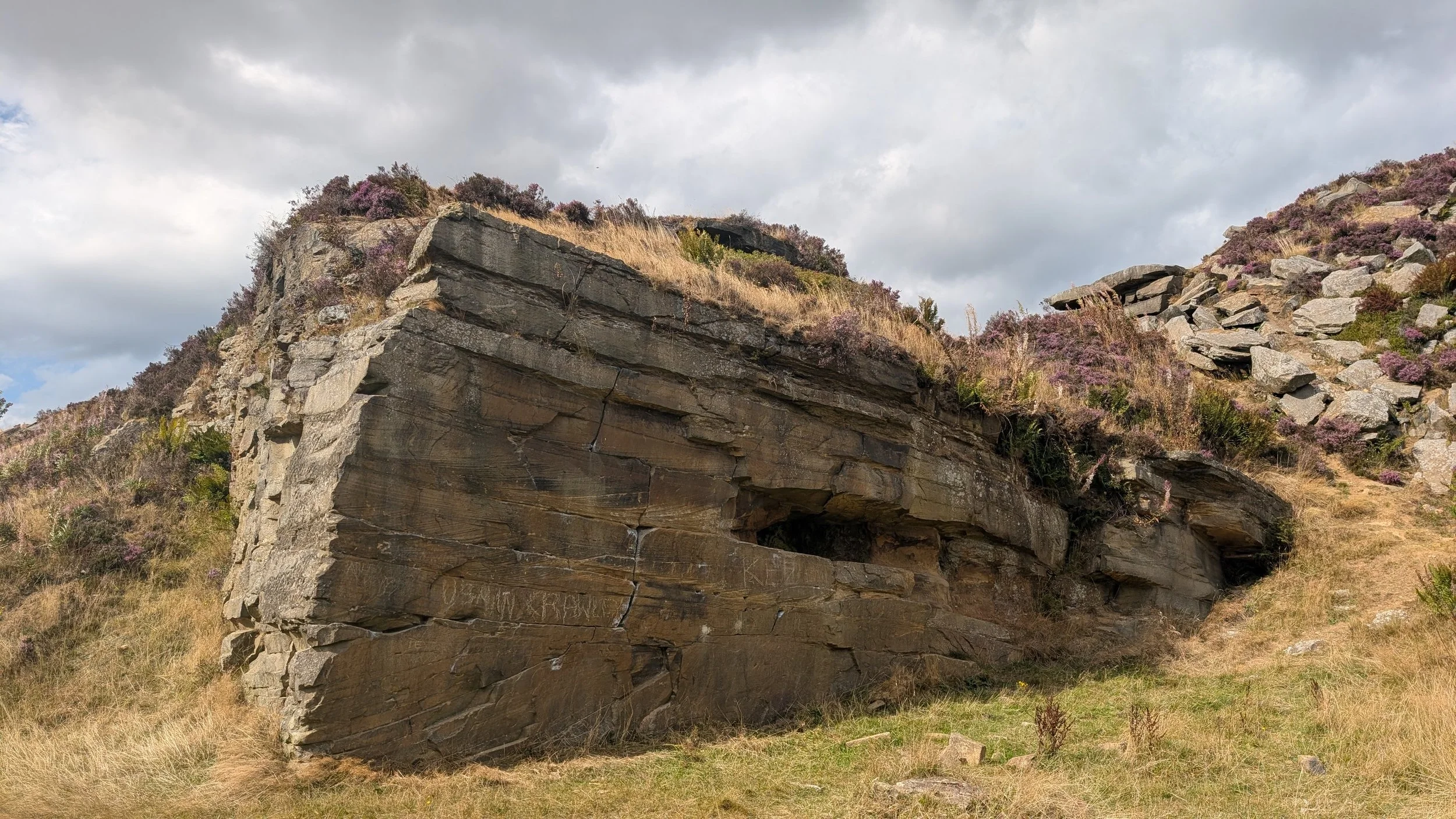
Wayfinder 8: Dragon head at West End Quarry
Walking directions: From Wayfinder 7, instead of continuing on the path you’ve been walking on, turn left on a path that passes between two boulders towards the old quarry. This path curves around the side of a hill. Keep following it until you reach an intersection, then turn left again. After a short, gentle descent and a steeper ascent, you'll reach another intersection of small paths. Ignoring the steep climb to your left, continue straight for a few paces on a path that stays level then gently descends, curving round to the right between old quarry stone. Descend into West End Quarry by whichever route you like, to pause at an unmissable cliff face that juts out from the heath.
About this Wayfinder
Strictly speaking, there have never been dragons recorded on Penistone Hill, but this cliff face and I beg to differ. In Wayfinder 8, the deep time dragon of Penistone Hill speaks of when she was a riverbed in a tropical forest, and of how sandstone is formed under pressure over millions of years. Look out for another stone carving from Stevan Tica here, which shows a river channel flowing through layers of sand.
I was excited to learn that Anne Brontë had an interest in geology and may have visited the Rotunda Museum during her time as a governess in Scarborough. I’ve always felt connected to Anne as I grew up on the Yorkshire coast that she loved, and feel likewise torn between the wild uplands and the North Sea.
The 19th century was a golden age of geology, with scientists and collectors just beginning to discover the ancient secrets stored in the Earth. In a certain light, the dragon head at West End Quarry has a rusty hue, where iron has washed through the rock. I call this her ‘Carnelian glow’ in the poem, in a nod to Anne’s prized precious stone collection and her necklace made of this striking orangey-red mineral.
The dramatic cliff face here is the result of an unusual and dangerous quarrying method. The men would force long iron bars into the base, while a designated worker stood as lookout at the top, looking for vertical cracks forming in the stone. When these cracks started appearing, they’d shout a warning to the men below to down tools and run! I don’t recommend reenacting this.
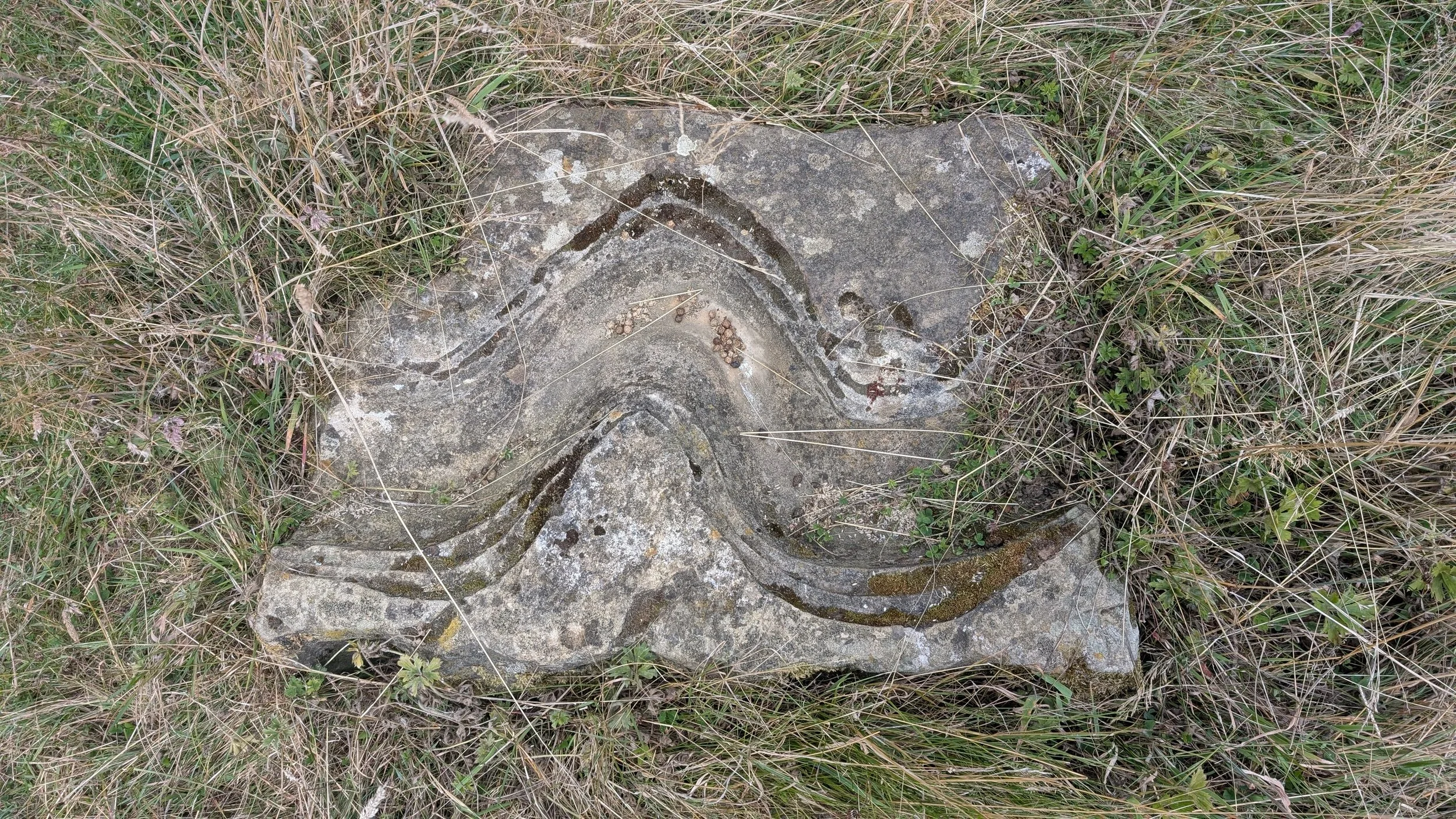
Stone carving of a river channel by Stevan Tica